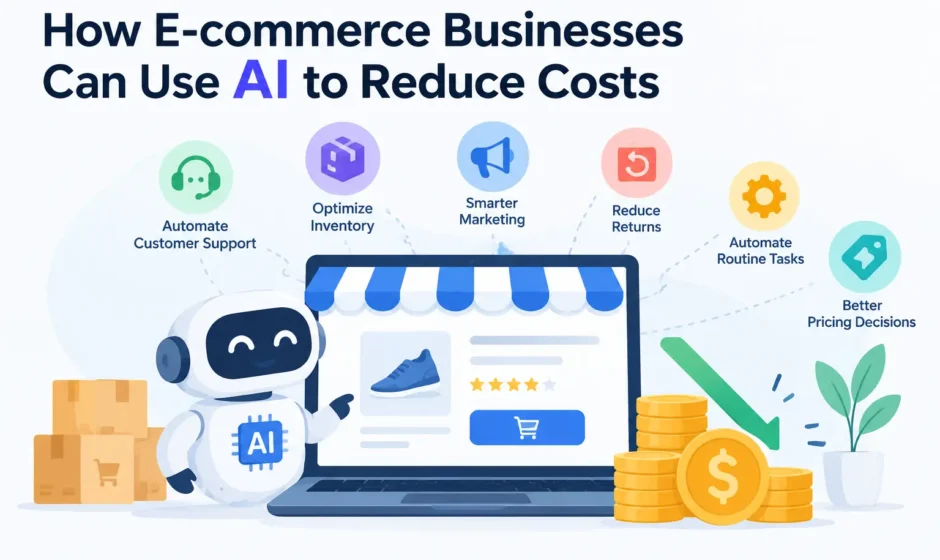

Running an e-commerce business can be expensive. From inventory and shipping to advertising, customer service, and website management, online retailers have many costs to control. As competition continues to grow, businesses are looking for smarter ways to improve efficiency without sacrificing customer experience.
Artificial intelligence (AI) is becoming one of the most useful technologies for achieving this. By automating repetitive tasks, analyzing large amounts of data, and helping businesses make better decisions, AI can help e-commerce companies reduce costs and operate more efficiently.
1. Automate Customer Support
Customer service can require significant time and resources, especially for businesses receiving hundreds or thousands of inquiries.
AI-powered chatbots can handle common questions about order status, shipping, returns, product availability, and payment issues. Customers can receive instant answers without requiring a human employee to respond to every basic question.
Human support teams can then focus on more complicated problems, potentially reducing support costs while maintaining faster response times.
2. Improve Inventory Management
Holding too much inventory can tie up money, while running out of popular products can lead to missed sales.
AI can analyze historical sales, seasonal trends, customer demand, and other factors to help businesses forecast future inventory requirements. Better forecasting can reduce overstocking and minimize unnecessary storage costs.
For example, an online clothing store could use AI to identify which products are likely to experience increased demand during a particular season and adjust inventory accordingly.
3. Optimize Marketing Spending
Digital advertising can quickly become one of the largest expenses for an e-commerce business.
AI tools can analyze campaign performance and identify which audiences, advertisements, products, and channels are generating the best results. Businesses can use these insights to reduce spending on campaigns that perform poorly and allocate more of their budget toward effective strategies.
AI can also assist with creating ad copy, product descriptions, and marketing content, reducing the time employees spend on repetitive content tasks.
4. Reduce Returns
Product returns can be costly because businesses may have to pay for shipping, restocking, inspection, and refunds.
AI can help reduce returns by improving product recommendations and personalization. When customers receive recommendations based on their preferences and previous behaviour, they may be more likely to choose products that meet their needs.
For fashion retailers, AI can also help customers select appropriate sizes by analyzing previous purchases and other available information.
5. Automate Routine Business Tasks
Many e-commerce operations involve repetitive administrative work, including updating product information, organizing data, generating reports, and monitoring orders.
AI automation can handle some of these tasks with minimal human involvement. This allows employees to spend more time on activities that require creativity, strategy, and decision-making.
For smaller businesses, automation can be particularly valuable because it allows a limited team to manage a larger operation without increasing staff at the same rate as sales.
6. Make Better Pricing Decisions
Pricing the right product at the right price can have a major impact on profitability.
AI systems can analyze factors such as demand, competitor pricing, sales history, and customer behaviour to help businesses make more informed pricing decisions. Depending on the business model, automated pricing systems can also adjust prices based on changing market conditions.
However, businesses should monitor automated pricing carefully to prevent unexpected price changes or customer dissatisfaction.
Final Thoughts
AI isn’t simply a technology for large corporations. E-commerce businesses of different sizes can use AI to reduce operational costs, automate repetitive work, improve inventory management, optimize marketing, and make better business decisions.
The key is to start with areas where automation can provide a clear financial benefit. Instead of trying to introduce AI everywhere at once, businesses should identify their biggest operational expenses and determine where AI can make the greatest difference.
When implemented thoughtfully, AI can help e-commerce businesses do more with fewer resources while improving efficiency and customer experience. As AI technology continues to develop, its role in controlling costs and improving profitability is likely to become even more important.